
Hockey Stretches: What to Do Before & After Hitting the Ice
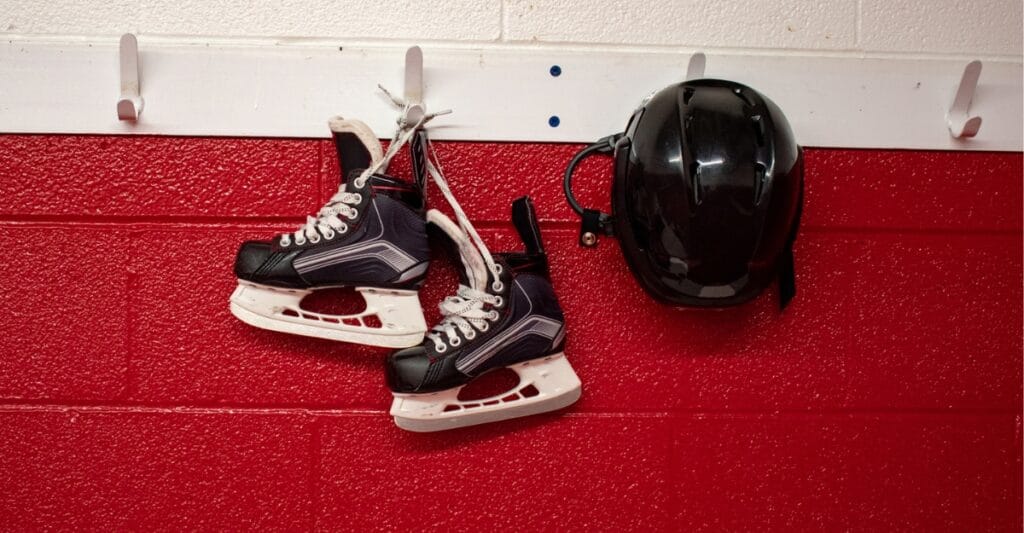
Hockey is a physically demanding sport and serious injuries can occur. Here are some stretches and tips to keep you on the ice, not the bench.
Starting Out
- Invest in equipment, sticks, and skates that suit your height and size.
- Be “head smart” — wear your helmet with the cage, shield, or visor properly secured.
- Sharpen your skates regularly for better performance.
- Repair or replace equipment that’s damaged or broken.
New to Hockey?
Get checked — not the on-ice kind — by a health professional (i.e. a chiropractor) to make sure it’s an appropriate fitness activity for you.
Know Your Way Around a Puck?
Routine chiropractic check-ups can help regular players optimize their performance (i.e. address any stiffness or soreness).
Pre-Game Stretches
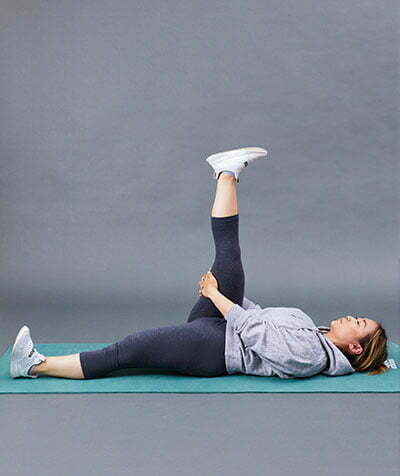
1. Hamstring Stretch
Lay on your back and bend one knee towards the ceiling. Hold the back of the thigh with both hands and straighten the knee as much as you can by raising your foot towards the ceiling. Hold the stretch for one second, then bend the knee and straighten again. Repeat 20 times on each side.
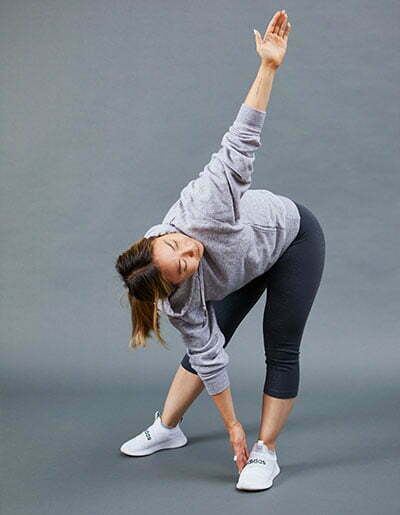
2. Groin Stretch
Stand with your feet slightly wider apart than your shoulders. Bend your knees. Shift your weight to the right leg. Reach down and across your body with your left hand to touch your right foot. Point your right hand up to the ceiling. Keep your back parallel to the ground. Shift your weight to the left leg. Repeat 10 times on each side.
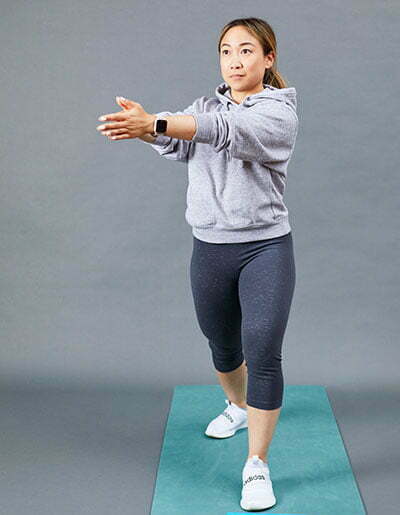
3. Hip Flexor Stretch
Stand with your feet shoulder-width apart. Step forward with your right foot into a “lunge” position. Your right knee should be directly over the toes of your right foot. Keep your left leg and your back straight. Extend your arms straight in front of you and bring your palms together. Turn your upper torso to the right, keeping pelvis and hips stationary. Hold for one second and repeat 10 times on each side.
Important:
- Never stretch a “cold” muscle. Always warm up before pre-game stretches.
- Don’t overstretch — be comfortable.
- Don’t bounce when stretching.
Post-Game Stretches
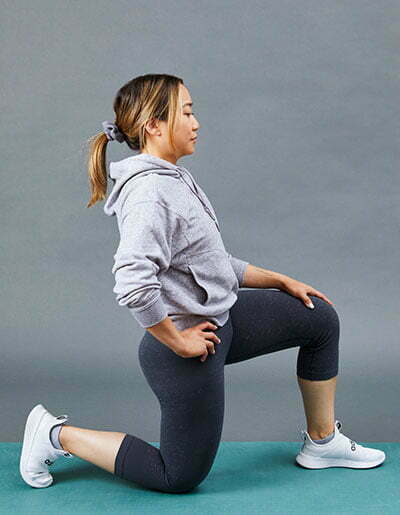
1. Quad Stretch
Stand with your back to a wall or the rink boards. Kneel onto your right knee (use a pad for cushioning) with your right foot flat against a wall. Your left knee should be bent in front of you at a 90-degree angle for support. Place your hand on your left knee for balance and lean back slightly to stretch your right quad muscle. Hold the stretch for 10 seconds. Switch legs and do three stretches on each side.
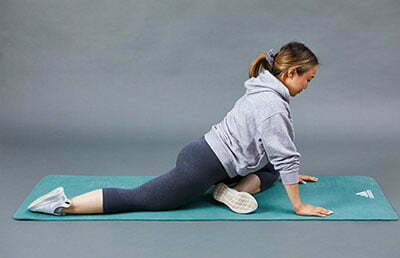
2. Glute Stretch
Sit on the ground with one leg slightly bent behind you and one leg slightly bent in front of you. Lower your chest toward your knee keeping your back straight and holding your chin up. Hold the stretch for 10 seconds. Switch legs and repeat three times on each side.
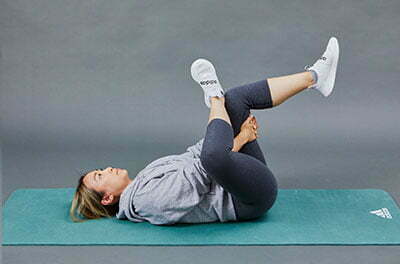
3. Hip Stretch
Lay on your back with your knees bent and feet flat apart on the floor slightly more than shoulder width apart. Lower your right knee to the floor and place your left ankle on top of it pushing the knee towards the ground. Keep your hips on the floor. Hold the stretch for 10 seconds. Switch sides and do three stretches on each side.
Safety Check
If you’re injured during practice or a game, don’t try to play through it.
Put ice on the injured area for periods of 15-20 minutes.
If you hit your head, be aware of signs of concussion:
- Dizziness
- Blurred vision
- Problems with your coordination or balance
- Difficulty remembering teammates’ names or the plays
- Any loss of consciousness (even briefly)
If you experience pain that lasts longer than your usual post-game soreness, ice the area and consult a chiropractor.
DISCLAIMER: No information from this document is intended as a substitute for professional medical advice, diagnosis, or treatment. Consultation with a chiropractor or other primary care provider is recommended for anyone suffering from a health problem. The CCA recognizes that research and data is constantly evolving. Please use this information in conjunction with the best available evidence.